NBC Rings in the Model
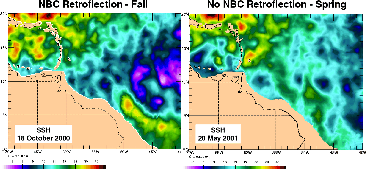
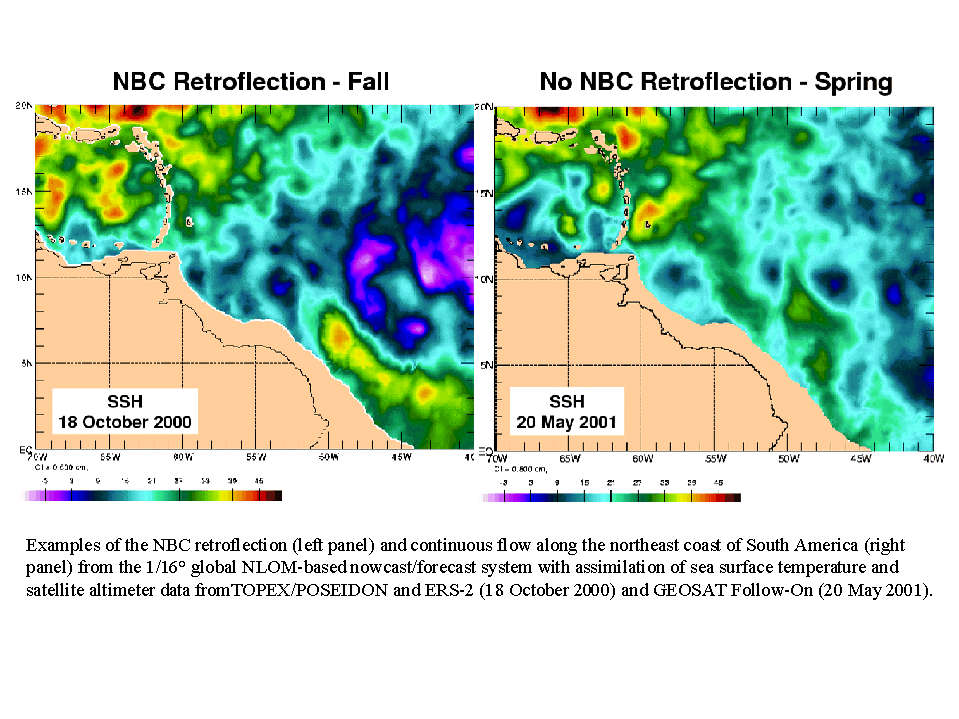
Throughout the time period of this study the NBC in the data assimilating model retroflects
and feeds the NECC from late summer to mid-winter. This is consistent from year to year.
During the remainder of the year, in agreement with observations, the NBC does not turn
back on itself. These two modes are illustrated in this figure. On 18 October 2000, the
NBC flows northwestward along the South American coastline then turns back on itself (retroflects) at about 8°N to flow into the ocean interior and feed the NECC.
The NBC retroflection is not in place on 20 May 2001.
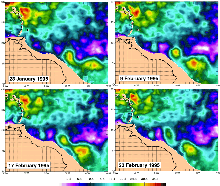 This figure
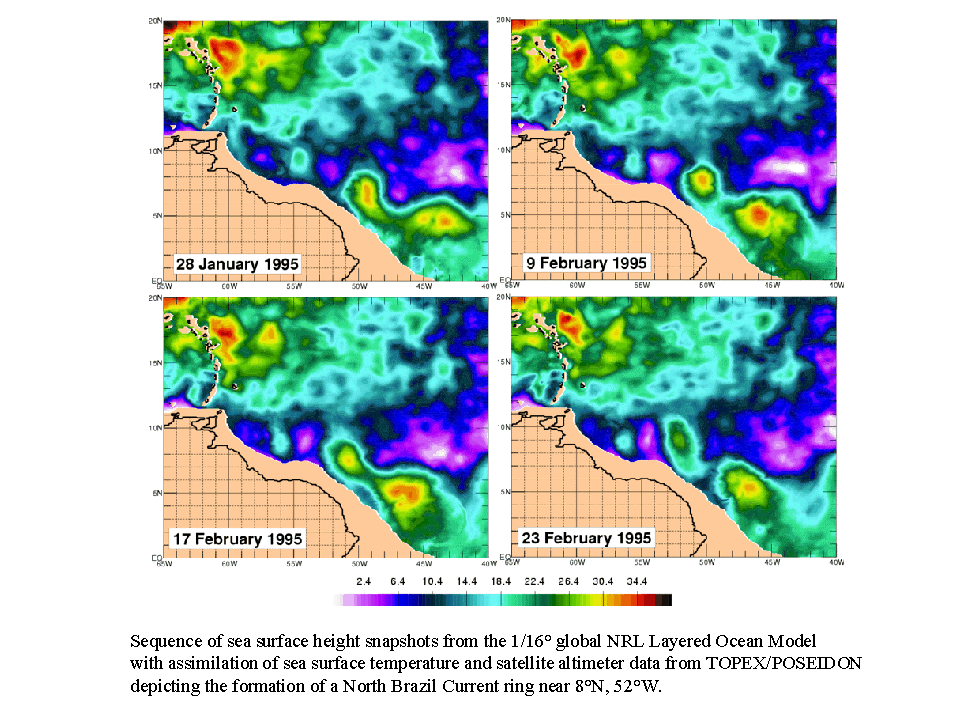
shows a sequence of sea surface height snapshots depicting the shedding of a NBC
ring from the NBC retroflection. The images are from the model with data
assimilation, but even the non-data-assimilating model realistically simulates NBC rings
(Fratantoni et al., 1995, 2000). The sequence shown begins on 28 January 1995 with
clear evidence of a retroflecting NBC. Twelve days later on 9 February, the retroflection
extends farther toward the northwest. By 17 February the NBC retroflection is in the
process of pinching off a large anticyclone. And by 23 February
the NBC ring is completely separated and propagating toward the northwest. At times
during the NBC ring shedding process, the ring nearly pinches off but then reattaches
sometimes more than once before completely detaching from the retroflection. Goni and
Johns (2001) also note the presence of a NBC ring during this time period.
This figure
shows a sequence of sea surface height snapshots depicting the shedding of a NBC
ring from the NBC retroflection. The images are from the model with data
assimilation, but even the non-data-assimilating model realistically simulates NBC rings
(Fratantoni et al., 1995, 2000). The sequence shown begins on 28 January 1995 with
clear evidence of a retroflecting NBC. Twelve days later on 9 February, the retroflection
extends farther toward the northwest. By 17 February the NBC retroflection is in the
process of pinching off a large anticyclone. And by 23 February
the NBC ring is completely separated and propagating toward the northwest. At times
during the NBC ring shedding process, the ring nearly pinches off but then reattaches
sometimes more than once before completely detaching from the retroflection. Goni and
Johns (2001) also note the presence of a NBC ring during this time period.
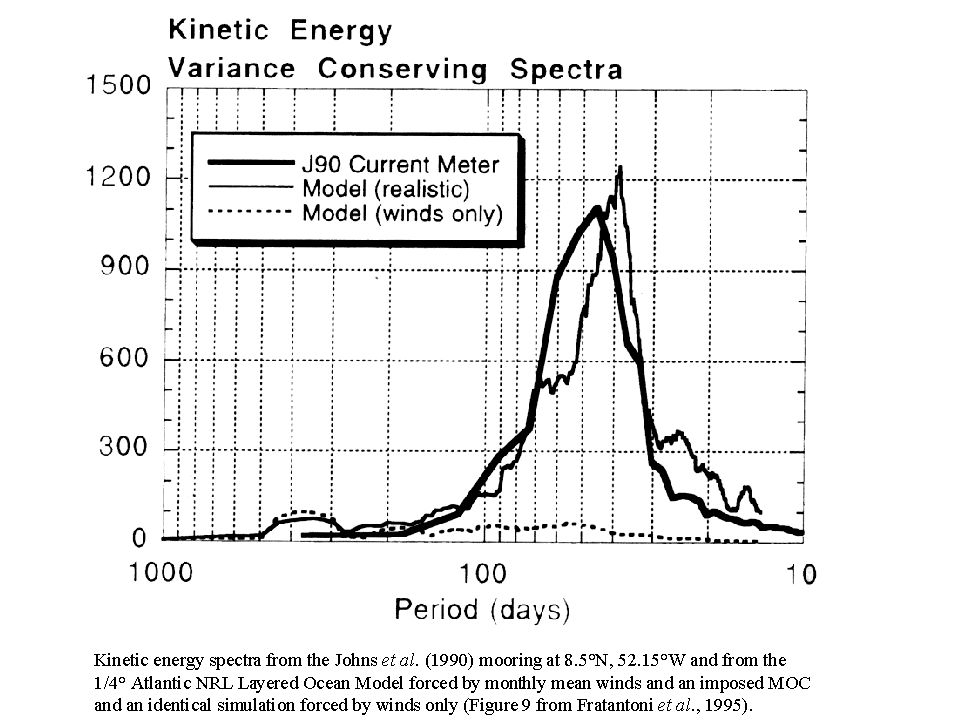
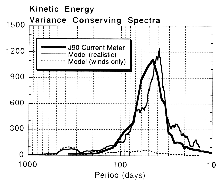 Fratantoni et al. (1995) showed excellent agreement between the kinetic energy
spectra of velocity from the Johns et al. (1990) current meter mooring at
8.5°N, 52.15°W and the corresponding grid point in a 1/4° Atlantic configuration
of an earlier version of NLOM. In addition to surface forcing by the Hellerman and
Rosenstein (1983) monthly mean wind stresses, their model included the thermohaline-
driven circulation via mass fluxes specified at the open northern and southern boundaries.
The magnitude of the MOC transport in the model was in agreement with Schmitz and
McCartney (1993). They also included a wind-driven only model in the comparison
and showed that, in addition to the very low mesoscale kinetic energy in the region,
the absence of a MOC prevents the shedding of NBC rings.
Fratantoni et al. (1995) showed excellent agreement between the kinetic energy
spectra of velocity from the Johns et al. (1990) current meter mooring at
8.5°N, 52.15°W and the corresponding grid point in a 1/4° Atlantic configuration
of an earlier version of NLOM. In addition to surface forcing by the Hellerman and
Rosenstein (1983) monthly mean wind stresses, their model included the thermohaline-
driven circulation via mass fluxes specified at the open northern and southern boundaries.
The magnitude of the MOC transport in the model was in agreement with Schmitz and
McCartney (1993). They also included a wind-driven only model in the comparison
and showed that, in addition to the very low mesoscale kinetic energy in the region,
the absence of a MOC prevents the shedding of NBC rings.
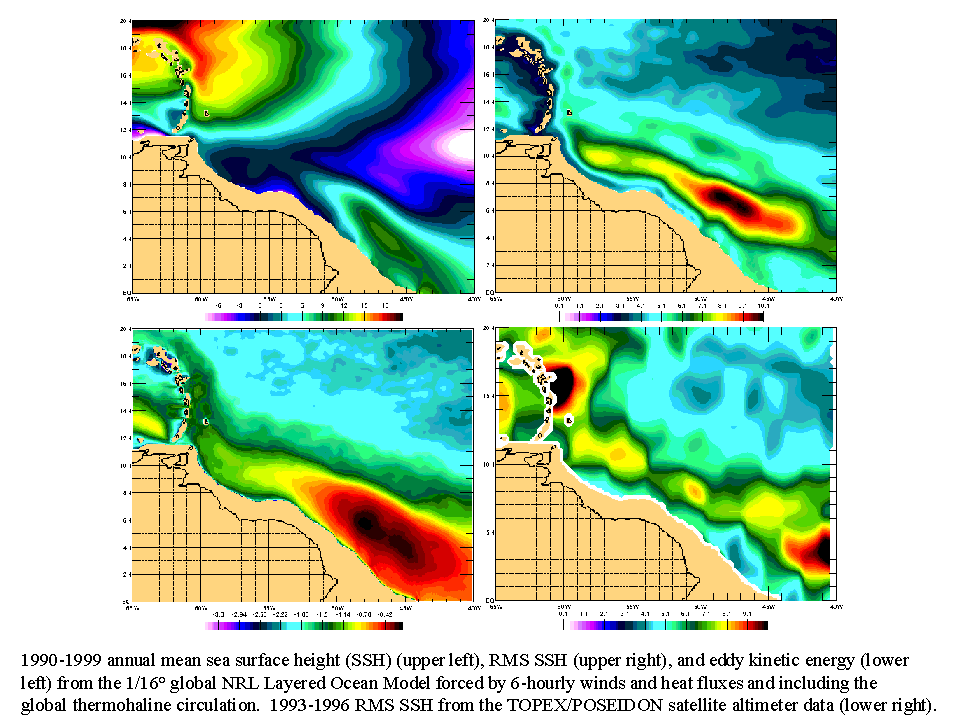
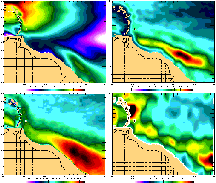 There is also evidence of large mesoscale variability in the NBC region
of the model used in this study. It is the 1/16° global NLOM with high-frequency
(6-hourly) atmospheric forcing and includes the global thermohaline circulation.
However, the results shown in this figure are from the model without data assimilation. The lower
left panel shows a corridor of relatively high eddy kinetic energy from the NBC
retroflection region to the Lesser Antilles island arc which bounds the eastern Caribbean
Sea. There is
evidence, too, that some of this energy passes through the island passages and augments
the mesoscale variability within the Caribbean. Enhanced mesoscale variability along the
northeast coast of South America is also seen in the upper right panel which shows the
RMS sea surface height (SSH) variability in the model. The magnitudes along the axis of
high variability from the NBC retroflection to the Windward Islands are similar to those
in the lower right panel showing the RMS SSH variability from the TOPEX/POSEIDON satellite
altimeter data. The upper left panel shows the annual mean SSH from this model without
data assimilation. The NBC retroflection, which occurs from mid-summer to mid-winter in
the model, is very evident. There is also evidence of northwestward flow parallel to the
coast of South America from the equatorial gyre to the North Atlantic subtropical gyre.
There is also evidence of large mesoscale variability in the NBC region
of the model used in this study. It is the 1/16° global NLOM with high-frequency
(6-hourly) atmospheric forcing and includes the global thermohaline circulation.
However, the results shown in this figure are from the model without data assimilation. The lower
left panel shows a corridor of relatively high eddy kinetic energy from the NBC
retroflection region to the Lesser Antilles island arc which bounds the eastern Caribbean
Sea. There is
evidence, too, that some of this energy passes through the island passages and augments
the mesoscale variability within the Caribbean. Enhanced mesoscale variability along the
northeast coast of South America is also seen in the upper right panel which shows the
RMS sea surface height (SSH) variability in the model. The magnitudes along the axis of
high variability from the NBC retroflection to the Windward Islands are similar to those
in the lower right panel showing the RMS SSH variability from the TOPEX/POSEIDON satellite
altimeter data. The upper left panel shows the annual mean SSH from this model without
data assimilation. The NBC retroflection, which occurs from mid-summer to mid-winter in
the model, is very evident. There is also evidence of northwestward flow parallel to the
coast of South America from the equatorial gyre to the North Atlantic subtropical gyre.